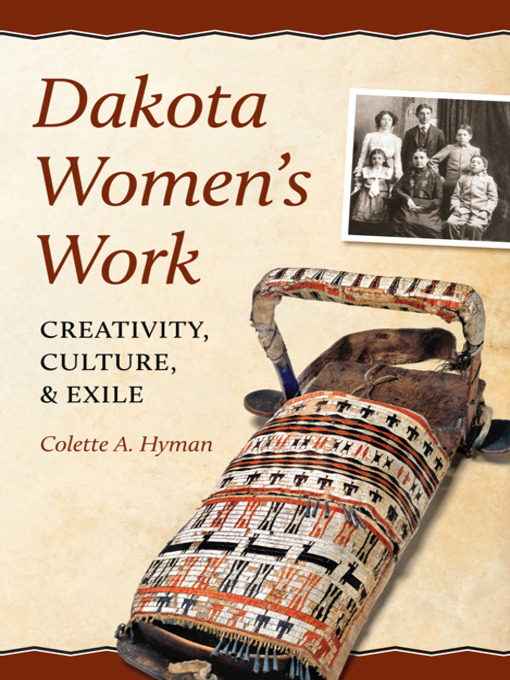
Mary Eastman Faribault, born in Minnesota, made them almost four decades after the U.S.–Dakota War of 1862. This and other ornately decorated objects created by Dakota women—cradleboards, clothing, animal skin containers—served more than a utilitarian function. They tell the story of colonization, genocide, and survival.
Author Colette Hyman traces the changes in the lives of Dakota women, starting before the arrival of whites and covering the fur trade, the years of treaties and shrinking lands, the brutal time of removal, starvation, and shattered families after 1862—and then the transition to reservation life, when missionaries and government agents worked to turn the Dakota into Christian farmers. The decorative work of Dakota women reflected all of this: native organic dyes and quillwork gave way to beading and needlework, items traditionally decorated for family gifts were produced to sell to tourists and white collectors, work on cradleboards and animal skin bags shifted to the ornamenting of hymnals and the creation of star quilts.
Through it all, the work of Dakota women proclaims and retains Dakota identity: it is a testament to the endurance of Dakota traditions, to the survival of the Dakota in exile, and—most vividly—to the role of women in that survival.
-
Creators
-
Publisher
-
Release date
March 6, 2012 -
Formats
-
Kindle Book
-
OverDrive Read
- ISBN: 9780873518581
-
EPUB ebook
- ISBN: 9780873518581
- File size: 5855 KB
-
-
Accessibility
No publisher statement provided -
Languages
- English
Formats
- Kindle Book
- OverDrive Read
- EPUB ebook
subjects
Languages
- English
Why is availability limited?
×Availability can change throughout the month based on the library's budget. You can still place a hold on the title, and your hold will be automatically filled as soon as the title is available again.
The Kindle Book format for this title is not supported on:
×Read-along ebook
×The OverDrive Read format of this ebook has professional narration that plays while you read in your browser. Learn more here.